
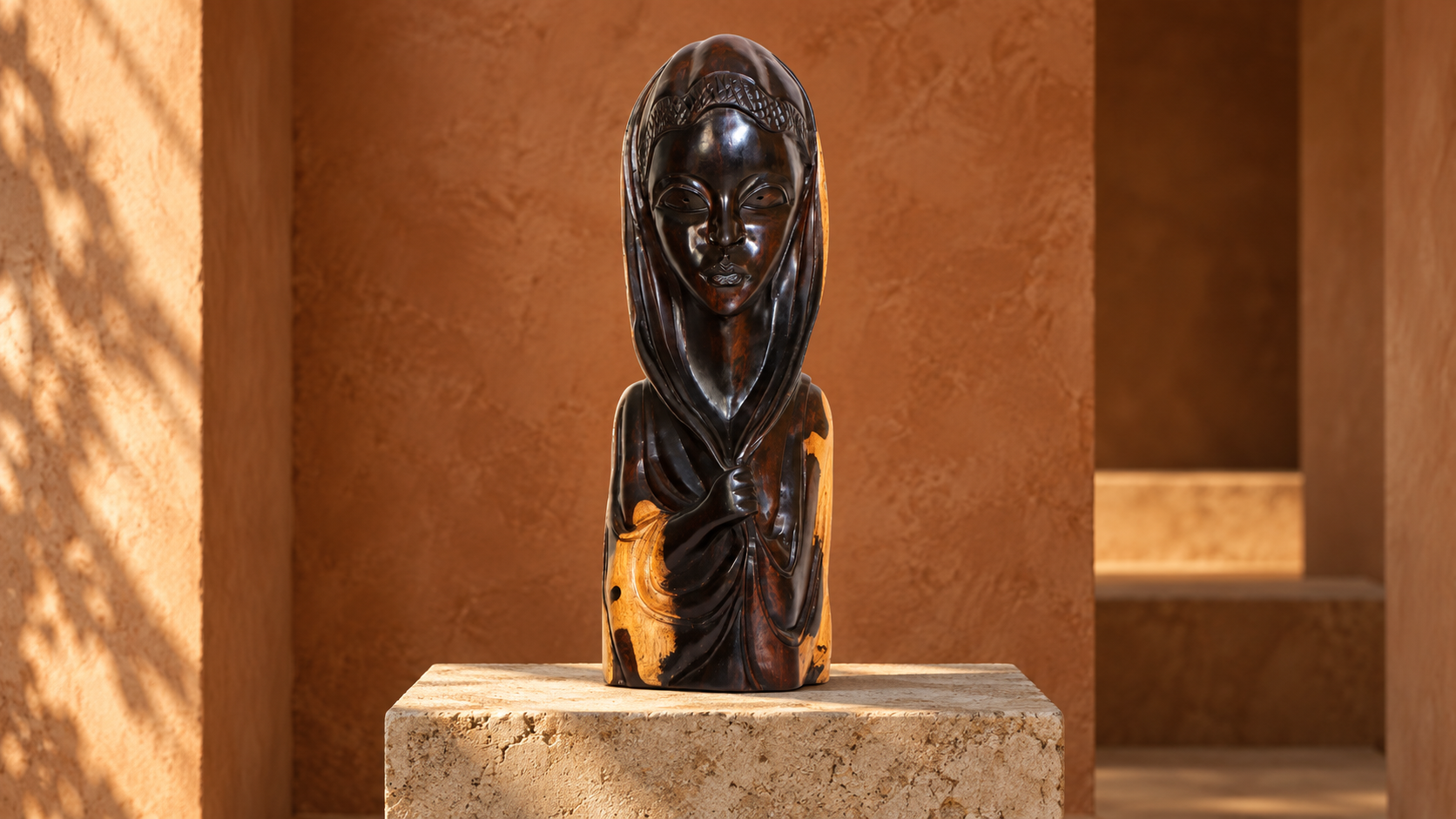
Her arms rise above a quietly composed face. A flowing carved dress carries the eye down to the base. In the Carved Woman Figurine, the wood’s contrasting tones become part of the portrait.
Carved Woman Figurine, front study. Raised arms, textured hair and flowing folds meet the natural contrast of dark and light wood.
A figure that changes as you turn
At first, this sculpture reads as a single upward gesture. The arms frame the head, while the slender waist and folded dress give the figure a long, continuous rhythm. Look closer and the surface becomes more varied: small carved strands around the face, smooth rounded planes across the torso, and deeper lines where the fabric gathers.
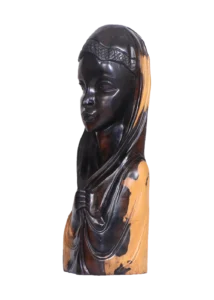
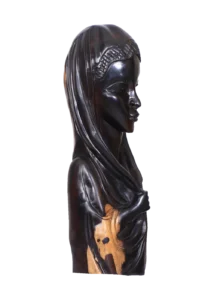
The side and reverse photographs reveal another part of its character. Pale areas of wood travel behind the head and across the back, changing the balance between dark and light. These visible contrasts give the object its own identity. The front offers a portrait; the other angles reveal how that portrait inhabits a piece of wood.
Wood with a longer story
According to Africa Ebony’s sourcing information, the wood for this work comes from mature trees harvested legally. Before it became an object, it was living material shaped by growth. The finished carving keeps that material presence visible through colour, grain and the meeting of dark and pale surfaces.
In a collection devoted to ebony carving, those variations invite close attention. Here, the lighter passages interrupt the dark silhouette and make the figure distinctive from several viewpoints. Colour and contour work together: one gives the surface character, while the other gives the figure its presence.
The female figure in African art
African figurative art has a long and varied history. Portraiture, family relationships, authority, remembrance and spiritual life have found expression through different materials and forms in different communities. The Metropolitan Museum of Art’s African collection offers a useful introduction to that breadth, spanning historical works and living artistic traditions.
That context helps us look at this figure with attention to its particular form. Its upright stance can suggest poise; the lifted arms create openness; the carefully shaped hair and dress bring detail to the human presence. These are interpretations of the visible sculpture. A fuller account of its maker, place of production and original intention would add another valuable chapter to its story.
The work held in every curve
Wood carving is a subtractive practice: a maker removes material to establish the form. As described in The Met’s guide to African art, carving differs from processes that build a shape by adding material. Each removal affects what can follow.
In hand carving, broad shaping gives way to finer decisions about edges, recesses and surface finish. The narrow spaces beside raised arms, the transition from shoulder to waist, and the folds of a dress demand different kinds of attention. This figurine rewards looking at those transitions. Its value lies partly in the care needed to make many separate details read as one balanced figure.
A human presence in the form; the character of wood in the surface.
Care for the object, respect for the forest
Our environmental commitment begins with responsible sourcing and respect for the material. Legal harvesting is an important part of that commitment. Our aim is to encourage thoughtful use of wood, support skilled work and value objects that can be kept and cared for over time. The maturity of a tree is one part of its sourcing story; responsible forestry and clear origin records matter too.
Long-term care extends that respect into the home. Give the sculpture a stable place away from direct sun, strong heat and damp conditions. Dust gently with a soft, dry cloth or brush, and avoid applying an unfamiliar oil or coating. Keeping an object in good condition allows its craftsmanship and material character to remain part of everyday life.
Continue looking: explore the Carved Woman Figurine and its 24-angle rotation. Follow the light wood accents around the reverse, then return to the face. Each view brings a different part of the carving into focus.